NEWSLETTER 5th August 2019
REMINDER OF OUR IRONBRIDGE GORGE Coach Trip this Saturday 10th August
The coach leaves promptly at 9.00am from St Peter’s Church, Kineton
We are looking forward to visiting this World Heritage Site, a cradle of the 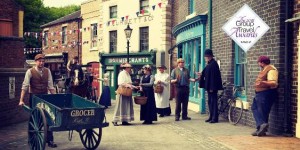 industrial revolution, which includes Blists Hill Victorian Town, the iconic bridge itself and other historic industrial sites in Ironbridge Gorge.
.
If you have any queries please contact Isobel Gill on 01926 640426 or reply to this Newsletter email
Report on 13th July visit to CHIPPING CAMPDEN
Vin Kelly started our tour of this busy town at the Market Hall, with a discussion of the geology, illustrated by examining the fossil shells in the oolitic limestone of the building, then came a quick scamper through prehistory and the Romans to come to the Saxon name 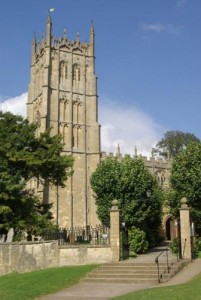 of “campa denu” – valley with cultivated fields – which had become a village by the time of the Domesday survey. The “chipping” – market – was added by Hugh de Gondeville in 1185, who also laid out the plan of the new town with regular burgage plots running back from the wide market street, still clearly visible in the town’s plan.
The town benefitted from the growth of the prosperous wool trade, with Grevel House and Woolstaplers House surviving from that period. The large medieval church also benefitted.
In the early 17th century Sir Baptist Hicks, an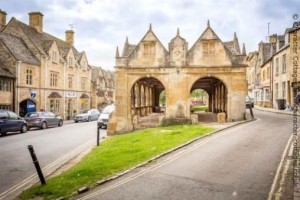 immensely wealthy man, built the market hall and bought the newly built Camden House
As a strategic location Campden saw action in the civil war; foragers from both sides plundered the inhabitants, and Campden House was burnt down by Royalist troops as they withdrew, to prevent it falling into parliamentarian hands. All 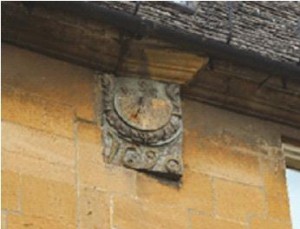 that survives are the banqueting houses and stables. The later 17th century was a period of construction, as evidenced by the many date stones proudly displayed on buildings, either newly built or added to in this period. There seems also to have been an obsession with timekeeping as sundials sprout out of facades all down the High Street
The early 17th century occasionally saw the awkward adoption of contemporary Palladian architectural features, like pilasters growing out of upper storeys with ionic capitals perched on them.
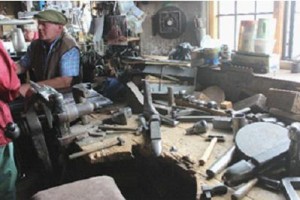
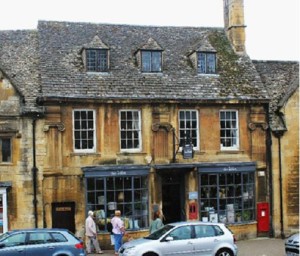 The town’s later decline was arrested in the early 20th century by the revival of the arts and craft traditions, specifically CR Ashbee’s decision to move the Guild of Handicraft to Campden in 1902. The silversmithing operation set up by the Guild is still run by David Hart,
 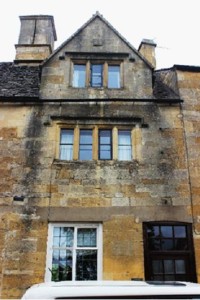 the grandson of George Hart who joined Ashbee 1901. The workshop in Sheep Street is fascinating, with the traditional tools around the walls and on benches, and bunches of old invoices hanging from the ceiling like wasps nests (also made of paper!)
 Our route then passed the grand almshouses to end at the church, within sight of the remains of Campden House. Inside the church is a splendid series of effigial tombs of the great and the good of Campden, and outside are more modest memorials, many dating back to the 17th century.
We all agreed that the tour was a great introduction to the historical riches of Campden, I for one will be back to see more.
Other Group News. The Group mounted a well attended display at the exhibition organised by Kevin Wyles at Tysoe Schoolroom on 14th – 15th July as part of the Council for British Archaeology’s Archaeology Week
World War 2 Oral Histories. A website founded by broadcaster and historian, Dan Snow, and author and broadcaster, James Holland, WarGen (http://wargen.org) is a crowd-sourced online repository of oral-history from the people who lived through World War 2. As well as containing varied stories from this fast disappearing generation, this group is now looking for individuals to join their volunteer team as interviewers in their local communities. They are also eager to hear from people who might have their own stories to tell. If you are interested in either becoming an interviewer or sharing your story, please contact Shane Greer at shane@wargen.org
KDLHG Committee Matters.
At the Committee meeting on Monday 1st of July we heard the good news that our new Treasurer Ted Crofts had finally managed to gain access to our HSBC accounts. Peter Ashley-Smith’s collected essays, edited by our president Bob Bearman, is printing. It will be priced at £9.99 and members and friends are invited to a launch party in the Village hall at 7.00pm on Friday October 4th for drinks and nibbles. We discussed a provisional programme for 2020-21 and agreed to canvass members for suggestions for outings and talks. The committee is concerned that we currently have neither a secretary nor a programme organiser, and help in these roles is urgently needed. The plans for the proposed archive room in the Village Hall have been submitted to the District planning authorities for approval. The next committee meeting is on Monday 16th of September at 7.30, at Catherine Petrie’s home.
DF 05.08.19
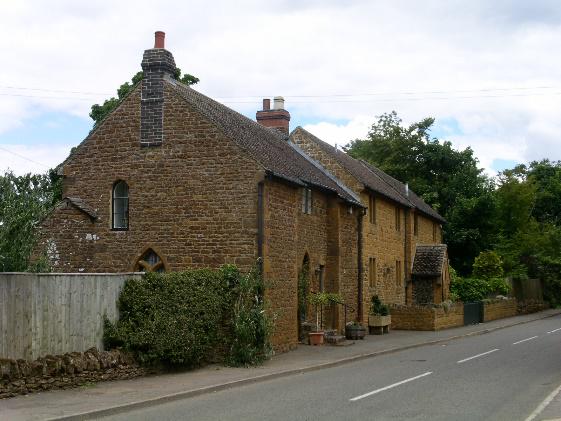
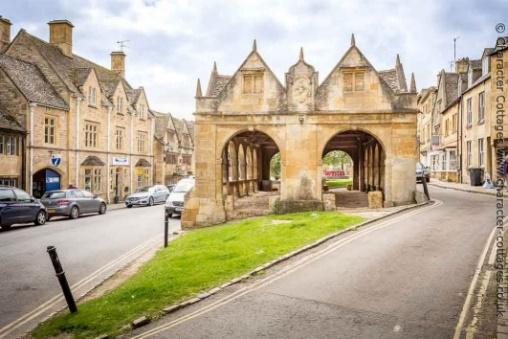 Pre Chipping Campden : Cotswold Stone, Chipping Camden 1
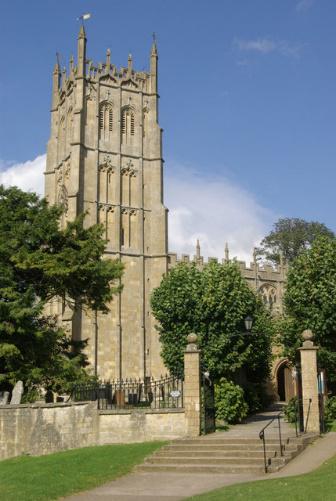 and Woolstaplers House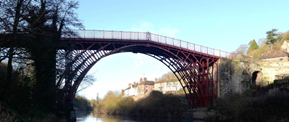
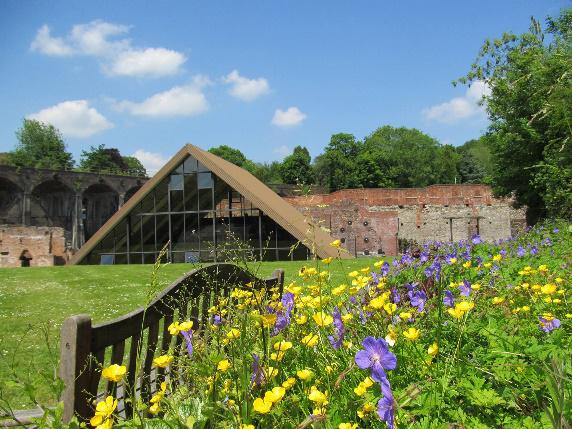 All sites have disabled access except for the upper floor of the Toll House near the bridge
 forces fought a series of skirmishes in the Cherwell valley above Banbury. The title of the talk suggests that there was more to this exchange than the traditional label would imply, so we look forward to hearing what Martin and Tony have unearthed about this action. The topic chimes with the Warwickshire Record Office initiative to transcribe the claims for compensation following the Civil Wars – local parish returns are currently being transcribed by several of our members.
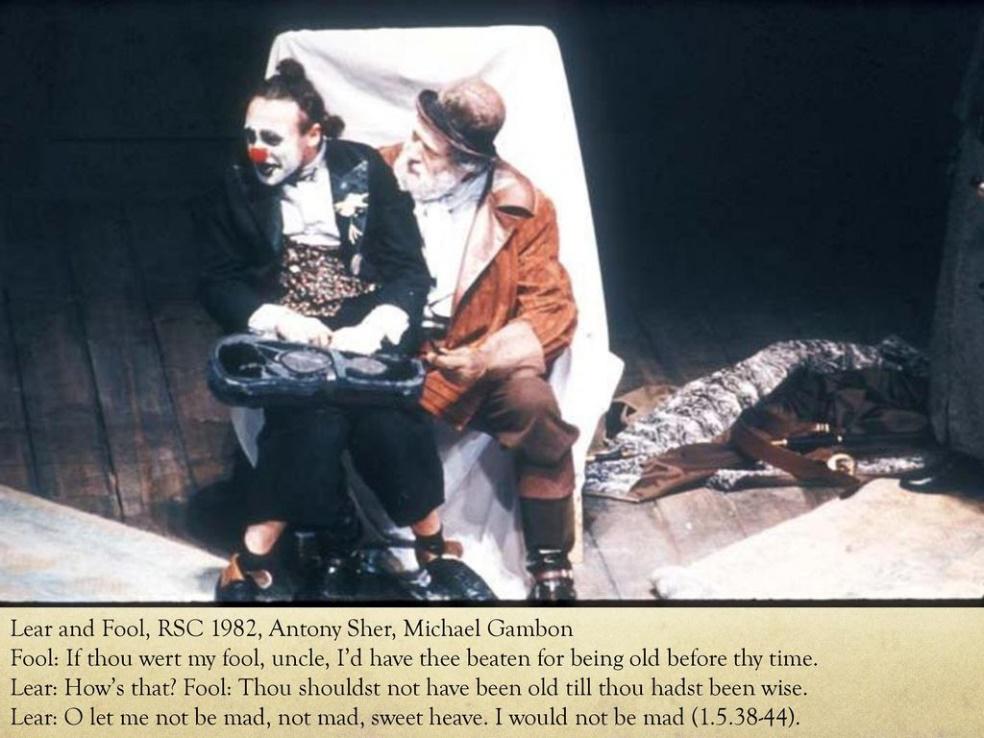
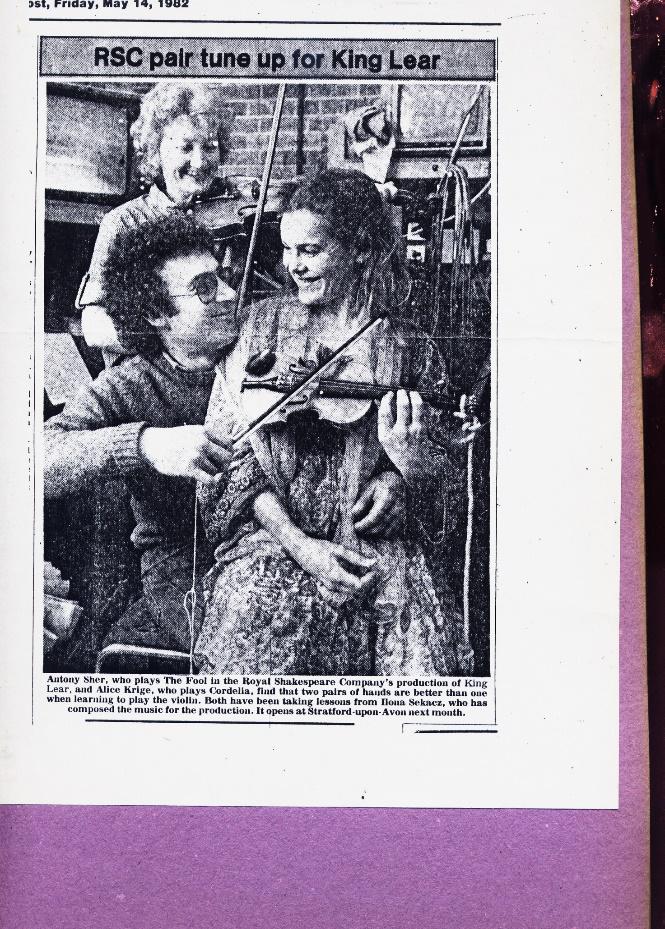 emphasise or comment on the action, like the diminishing status of the fanfares and flourishes introducing King Lear’s entrances as his own standing declined. And in the same play the healing property ascribed to string music is used to treat Lear after the battle scene. We still use the phrase “If music be the food of love…” The music and sound in a dramatic production must contribute to the director’s vision, although Ilona acknowledged that actually when writing she believes that the music is, obviously, the most important element of the production! Considerable ingenuity might be required, for instance to accommodate non-singing actors who have songs in their roles, or alternatively, to write new material for accomplished singers, while enhancing the purpose of the production. Ilona illustrated some of the innovative ways she has made sounds, particularly the “prepared piano” when objects are laid on the strings or the strings are abused in various ways to produce new sounds (a Wigmore Hall piano may still contain a steel ball-bearing lost in one such session!). Her own experience as a violinist sometimes influenced her solutions: using an unplugged electric violin to give a thin and tremulous tone in the film Solomon and Gaynor, or a re-tuned three-quarter violin, used by Tony Sher like a ukele as the fool in King Lear. Ilona left us wanting to know more as she tantalisingly skipped through a dozen or so fascinating-looking slides without comment, except that she was running out of time, perhaps appropriately for a talk with metronome in the title. Gill Ashley-Smith led the vote of thanks for Ilona’s insights into a successful professional career, pointing out how little, sometimes, one knows about familiar people in our own community.
 The forthcoming K&DLHG meeting is on 15th February when our member Ilona Sekacz will give us a talk entitled The Pit and the Metronome: writing music for Shakespeare. Ilona will draw on over 35 years of experience writing music for the theatre, TV, public events and films, concentrating on her long association with the RSC and the changes she has seen (and heard), caused in part by technological advances. She will describe her experience of working with innovative directors and actors, and the role of music and sound in shaping their visions of Shakespeare’s dramas. Ilona has seen many changes, from composing with pencil on manuscript paper and cutting and splicing magnetic tape, to computers which access virtually endless resources and manipulations. We look forward to hearing, literally, how our local national theatre company has approached the use of music in Shakespeare productions.
 Arc
Arc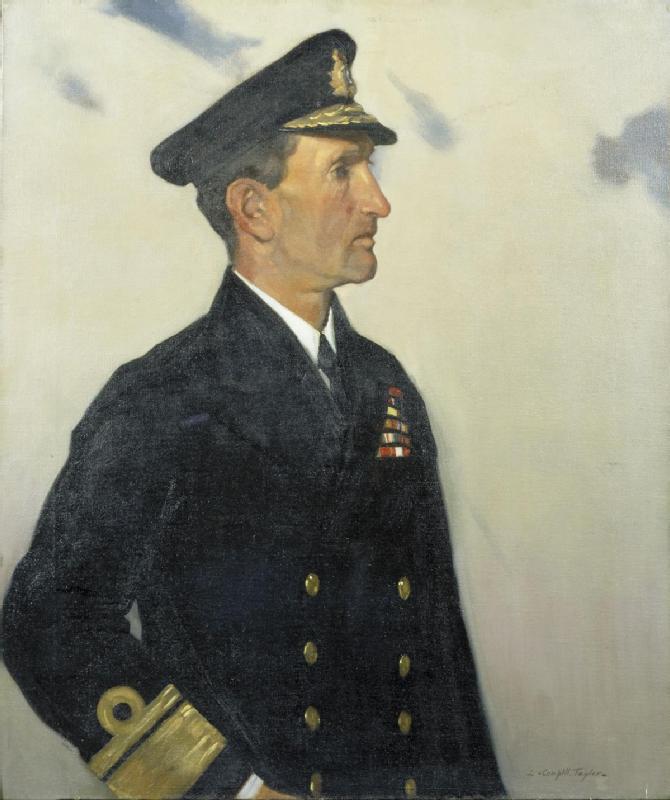 remembered in Kineton not only through his last residence “Admiral’s House” in Bridge Street, but also his solemn funeral through Kineton in 1956. He saw action in the Royal Navy fairly continuously from the late 1880s, including in the Boer War, WWI, and in interwar duties around the Baltic, and then in WWII, in his 70s, with the commandos. We look forward to hearing from David more about our most illustrious military hero, whose banner still hangs in St Peter’s Church.
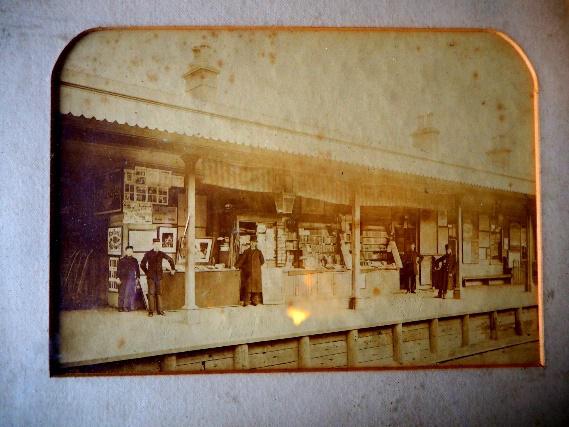 Camp. This had been a PoW camp during the war (Camp 31) and a stone has been found inscribed “2 PoW Camp 31 1943 Andernach” built into a local farmyard. George put the experience of some of the Polish fighters and their families in the aftermath of WWII into context. The pictures of the camp and the interiors of the nissen huts and temporary buildings vividly showed the way families made the most of the conditions. In the camps Polish national dress and language were fostered, and George demonstrated that he still spoke Polish. It was a surprise to hear that there is still a resettlement camp with inhabitants who have not intergrated into the British community. Peter Waters followed, with reminiscences of his family’s Chislehurst bookselling business dating back to the mid 19th century. After a brief genealogical survey Peter donned a variety of hats to enact a series of apparently real dialogues between customers and
  booksellers. These ranged from being asked to act as a creche, to being berated for not selling things other than books. I enjoyed the idea that signed copies of Shakespeare or even the Bible might be available. If only! Peter’s fine performance caught the absurdity of some bookshop conversations.
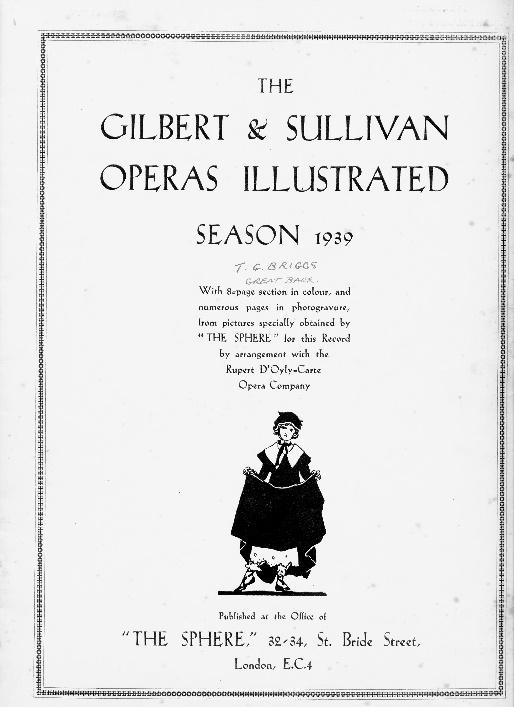 execute himself before he can execute anybody else. Bob gave us a moving rendition of “Tit willow, tit willow, tit willow”. Having reduced us to tears, he stiffened our sinews with The Yeoman of the Guard. Gilbert’s lyrics satirising the politics and mores of the late 19th century seemed strangely relevant to our contemporary situation, with many a sage head nodding as parliament, and peers of the realm, got the Gilbert treatment in Bob’s fine and individual account of the songs.
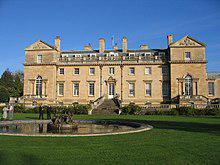 Moreton Morrell. The Hall has already featured in a number of our evenings, most recently in John Berkeley’s description of its requisition by a unit of the Czechoslovak Field Artillery in WWII. Brian’s position as a long serving member of staff at the Agricultural College, which now occupies the Hall and its estate, has given him an insider’s view of its development, and he has been writing the official history. The Hall was built by an American businessman, Charles Tuller Garland in 1906, one of several American owned houses in the area – namely Ashorne House and the short lived Moreton Paddox. Moreton Hall was luxurious, with silver door-furniture, marble bathrooms, and large oak panelled rooms. The female servants lived in the attics, the male servants in the basement. The gardens around the house included a rose garden, a cascade and pond, a tea house, a sunken garden and extensive walks. A polo ground occupied part of the estate and international polo stars played there. The estate supported a working farm, and after being sold in 1939 and then requisitioned by the military in WWII, it became an agricultural college. In the audience were past and present members of staff, as well as ex-students, and they contributed anecdotes and reminiscences during the questions session. Brian Lewis remembered the marble bathroom; and the billiard room’s later function as the student bar seemed to hold fond memories too. The recent diversification as a conference and wedding venue may have saved some of the college assets from the
 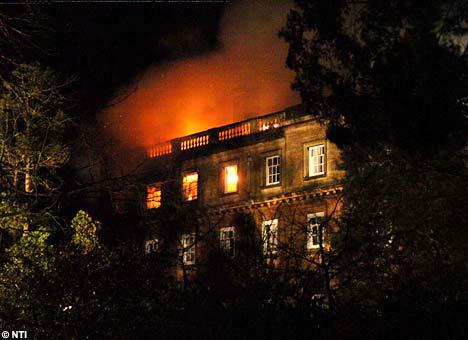 disastrous 2008 fire, which gutted most of the Hall. Many college functions, including the library, had by then been dispersed to other estate buildings. The exterior has been restored and plans are afoot to reconstruct the interior over the next few years. Brian Lewis gave Brian (Morgan) our thanks for illuminating the history of a building and institution on our doorstep, and which has influenced so many of our members’ subsequent careers.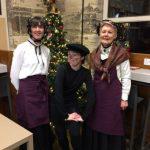

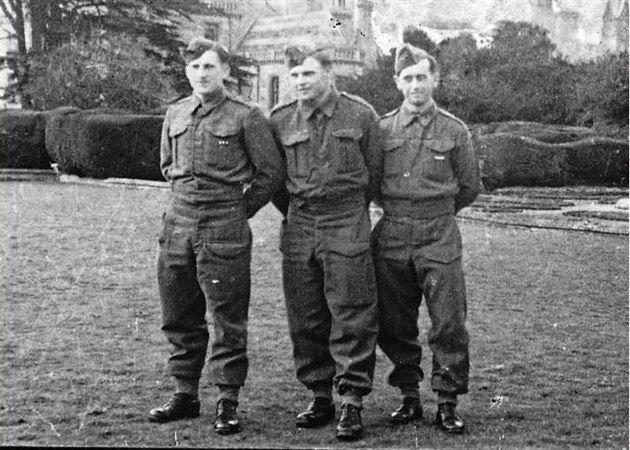 of individuals from their villages in eastern Czechoslovakia, John recounted their tortuous routes to England to escape the Nazi persecution about to overtake their homeland. The British military facilitated the evacuation of 4,000 Czechoslovak army volunteers from the south of France via Gibraltar. Once here, as the Czechoslovak Free Army, they moved around the country, training in Scotland, at Cholmondeley in Cheshire, and sent to duties in Seaton in Devon, Leigh on Sea, Lowestoft and Harwich. Their quarters around south Warwickshire included Leamington, Moreton Paddox, Moreton Morrell, Butlers Marston, Walton Hall, and Kineton.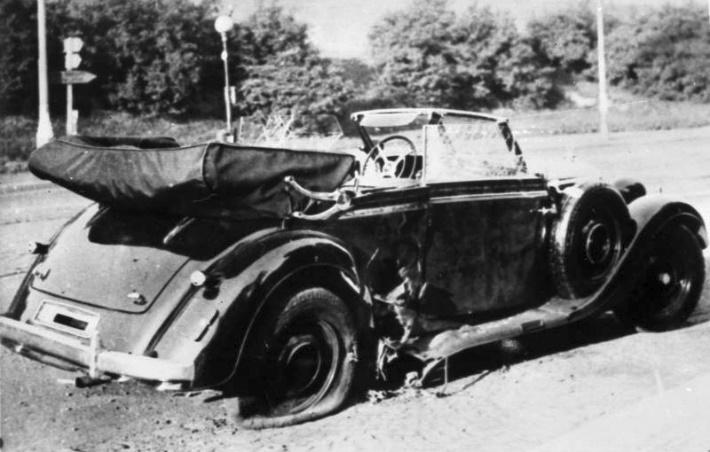
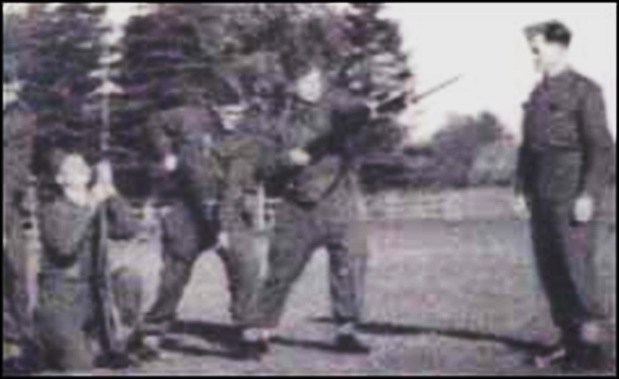 and Kineton were all used by to house Czech refugees and soldiers. In 1940 exiled soldiers of the Free Czechoslovak Army were secretly trained in Warwickshire for a mission to assassinate the SS Deputy Chief.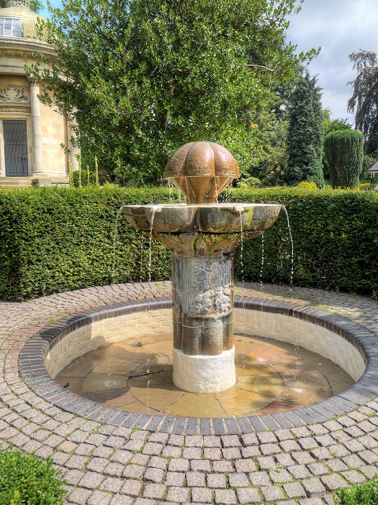
 from Sanderson Miller’s 18th-century picturesque tower and ruins, through the vandalism of the last century, to explain what remains today. Apart from the tower, all that survives of what first attracted visitors to the spot are three stones on the corner of a drive and the very tidied-up and extended Egge Cottage. Andrew surprised us by listing and mapping a total of seven tea gardens in the village itself and two more, one on the Knoll and another at Sunrising House. In the late 19th until the mid- 20th century these thriving businesses catered for hundreds of sightseers arriving by coaches charabancs, carriages, bicycles and car. We saw an ad. for cheap train excursions from London to Edgehill in 1902. The biggest establishment, run by Mr Griffin, was simply known as “The Edgehill Tea Garden”. It hosted events such as the dance in 1904 attended by more than 60 people, including the enthusiastic vicar, with dancing from 8.00pm to 1.00am. Larger still, and certainly more radical, was the 1890 meeting of several hundred liberal supporters – “separatists” in the press reports – harangued by an MP and our own Bolton King. Ratley Grange had a post-office, a butchers, a grocers, a baker, the inn and the quarry. As Andrew pointed out we owe much of our knowledge of Edgehill’s past and its flourishing tourist trade to photographers making commercial postcards but unwittingly recording its now lost glories. The current incarnation of the Castle Inn is the successor of the vibrant activities now represented by faded paint on a gate pillar, an urn in a private garden, a carved fleur de lis mounted upside down as an angel and a length of dropped kerb. Andrew was congratulated by Rachel Mander on his research, and his informal, lively presentation of part of the relatively recent past that has all but disappeared.