NEWSLETTER 11th February 2021
AS THE VILLAGE HALL REMAINS UNAVAILABLE THE TALK ON February 19th WILL TAKE PLACE AS AN EXCLUSIVELY ZOOM PRESENTATION. OUR CONTINUING APOLOGIES TO OUR MEMBERS WHO DO NOT HAVE ACCESS TO THIS SERVICE
Our February meeting on Friday 19 will be a presentation, via Zoom, by Professor John Hunter describing the progress of The Making of Tysoe Project which formally commenced almost exactly a year ago, just before the first covid-19 lockdown. This is an ambitious project which aims to integrate and expand the many strands of information about the historical development of Tysoe parish.
The project looks at the people who lived in the area in prehistoric, Roman, medieval and later times. Key themes are the early settlement patterns, the evolution of the three hamlets, the role of the church, ownership and patronage throughout the centuries, and the ways in which society integrated with its surrounding landscape and resources.
It involves landscape survey, geophysics, place-/field-name records, population profiles, structural analysis of the church and other buildings, documentary searches, archaeology and history. All this will continue in parallel with recording church iconography, village memorials and well heads/springs together with the collation and digitising of vulnerable records, photographs and genealogical information housed variously around the village.
The object is to carry out an audit of Tysoe’s heritage, to safeguard what is important or special and ensure its availability for future generations. It is anticipated the project will create a new guide book for the church, tourist information literature, a web-based archive of data and photographs, appropriate academic papers and, most importantly, a resource that can accessed by anyone and which can be built upon in the future.
Some of this information is already available, the result previous research and collecting, but needs collating and analysing.
Professor Hunter is a resident of Tysoe and has been active in ensuring that the heritage of the village is acknowledged when decisions are being taken which can affect the historical significance of the environment. He has spoken to us before in his capacity as a forensic archaeologist so we can expect a stimulating talk. A Zoom invitation will be emailed to members of the Group and friends on Thursday 18th February. The talk will be recorded, and when the Village Hall becomes available again it will shown to Zoom-free members.
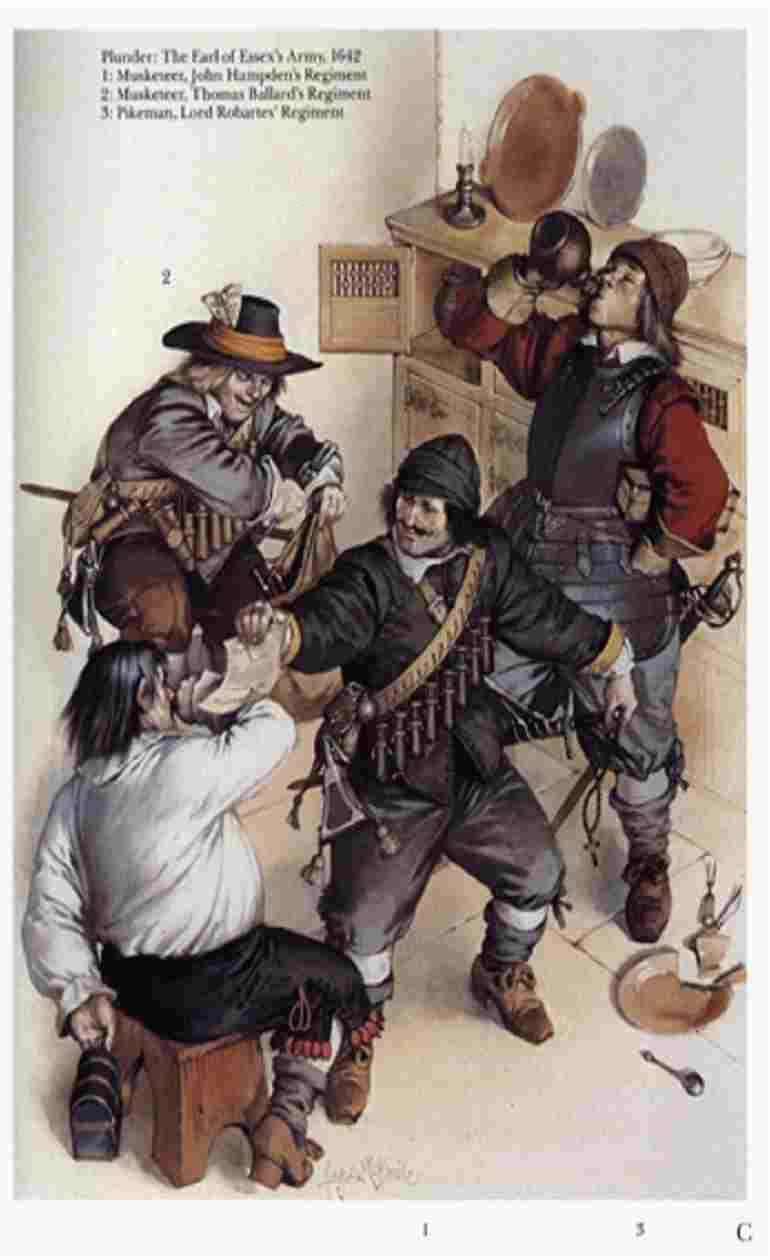
Report on the 15th January talk by our founder member David Beaumont, who presented the work of transcribing claims for compensation following the 17th century civil wars. His work contributes to an ambitious county-wide project initiated by Dr Maureen Harris with the support of the Friends of the Warwickshire County Record Office and the Dugdale Society. The very first page of the Kineton accounts reflects the involvement of the village in the wars, as it details the various troops who were quartered on the inhabitants, including the Earl of Essex’s before and after the battle of Edgehill in 1642, and Cromwell’s troops in 1645. After David’s talk Brian Lewis stumped us all with a question about the date of the siege of Banbury, but this Kineton page mentions “Colonell Fynes and his company when they went to besiege Banbury quartered here [Kineton] one night in July 1644”, so that answers Brian’s query! David also transcribed the Tysoe and Oxhill accounts; a typical one from Tysoe is Henry Eglington’s for the costs of accommodating 15 troops in December 1642, only a few months after Edgehill. We were privileged to have the local accounts set out for us so clearly by David. .The Dugdale Society is planning to publish the edited transcriptions with an analysis by Maureen in due course.
2021 Programme correction: The date given in the last Newsletter for April’s talk was a misprint, the correct date for the talk “Back Tracks” by Colin Clay and Phil Taylor is April 16th. Thank you to the keen eyed who spotted this!
2021
February 19 Professor John Hunter: The Making of Tysoe Project: the story so far.
March 19 AGM (see below)
April 16 Colin Clay and Phil Taylor: Back Tracks: detecting the past
May 21 Michael Luntley: From This Ground: songs and stories from 19thcentury agricultural workers (a performance, so subject to covid restrictions)
June 11 Sheila Woolf Guided Tour of Stoneleigh, subject to covid regulations
July and August Summer outings, to be confirmed
September 17 Peter Coulls and Alan Jennings: Warwick and Leamington Tramways
Oct 15 tbc
Nov 19 tbc
Dec 10 Christmas treats
2022
January 21 tbc
February 18 tbc
March 18 AGM
Official covid advice and regulations may change for better or worse in the coming months, so we will be assessing the programme one meeting at a time and we will confirm each event when we are reasonably confident that we can run it. Even in a strict lockdown we intend to continue virtual meetings online on the regular dates, but they may not be by the speakers or on the topics set out in the current 2021-22 Programme. Please be patient if an eagerly awaited talk is postponed. We will try to re-schedule any speaker not suited to the Zoom route.
The 2021 AGM
In March our 2021 AGM will be conducted by preliminary emails and posts, with a Zoom meeting on March 19th to receive the results of committee nominations and ballots, the Treasurer’s report and the audited accounts, the Chairman’s Report and any other business members may want to raise.
The present committee is perilously low in numbers, comprising just 8 members. This is not sustainable and we urge members seriously to consider joining us in steering the Group’s activities and ensuring that we continue, and continue to represent your interests. The committee work is not onerous, we meet on average 5 times a year for less than 2 hours. If you feel you could contribute please consider putting your name forward for the new committee at the forthcoming AGM. Contact me (details below) or any committee member if you have any queries.
Other Society News
Warwickshire Local History Society
K&DLHG is affiliated to WLHG and our members are entitled to join their meetings.
February Talk via Zoom on Tuesday 16 February at 7.30pm, when Adrian Walter will speak about ‘Non-conformist Education and Outreach in Stratford-on-Avon and District 1860 – 1930’.
Please see the website for a summary of the talk and the forthcoming WLHS programme, and click on this link to register your attendance for the February talk:
https://www.eventbrite.co.uk/e/warwickshire-local-history-society-lecture-tickets-138259348433
WLHS Annual General Meeting via Zoom on Tuesday 20 April at 7.15pm, followed by Professor Chris Dyer who will speak about ‘Immigrants in Warwickshire: a mobile population 1200-1525′.
Many other local societies are running their talk series via zoom! Check the Warwickshire Local History Society website for up to date lists.
Council for British Archaeology West Midlands
The CBA News from the Past will be held this year as a free on-line event on Saturday March 6. The day will be hosted by Wessex Archaeology and will feature an appearance from Phil Harding. The day is free….see link below
CBA West Midlands News From the Past Digital 2021 online conference Sat 6th March 10.00am to 4.30pm. Click on the link below for details of programme and how to register to join the meeting.
https://www.archaeologyuk.org/cbawm/meetings.php#news
CBA West Midlands have also given details of local history and archaeology podcasts.
Amongst several podcasts about the region CBAWM has recently released podcasts by Dr Roger White of the University of Birmingham on Wroxeter Roman city and the Roman West Midlands. https://historywm.com/podcasts
Other local on-line offerings:
Virtual Tour of Shrewsbury Castle archaeological excavations
http://psg.shropshire.gov.uk/virtual-tours/?id=2903
Birmingham Museum virtual tour https://www.birminghammuseums.org.uk/bmag/virtual-tour
Herefordshire Museum and Art Gallery Life through a Lens virtual tour https://www.herefordshirelifethroughalens.org.uk/virtual-exhibitiontours/
Warwick Castle Virtual Tour https://historyview.org/library/warwick-castle/
Explore Staffordshire Tithe maps, recently made available online. Both the maps and the apportionments can be viewed on this newly published resource: https://www.search.staffspasttrack.org.uk/search.aspx?SearchType=2&PageIndex=1&ThemeID=774
Walk around the UNESCO Black Country Geopark . If you’re local to the Black Country there are many Geosites to walk and exercise in within the UNESCO Black Country Geopark (and for everyone else once lockdown is over)
https://blackcountrygeopark.dudley.gov.uk/sites-to-see/
KDLHG Committee Matters.
The committee met via Zoom on 26th January. The need for more committee members was emphasised by the fact that only 6 of the committee were available for this meeting. The Group’s finances remain healthy, the matter of subs for 2021 will be decided at the March AGM. The December presentations by members about their Memorable Christmases was well received and gave an insight into the widely varying experiences of our community. We considered the speakers needed to fill the 2021-22 programme and a number of candidates were identified for following up. The outing to Stoneleigh for 11th June 2021 was confirmed, subject to covid restrictions being lifted, but the August coach trip planned for Croome Park Worcestershire was put on hold awaiting a positive view of the future. The archive arrangement with Ark Storage is expected to remain in place for some time.
The next committee meeting is scheduled for Tuesday March 2nd at 7.00pm via Zoom
DF 11.02.21
Contact: David Freke
Email frekedj@globalnet.co.uk
07876 290044
 The 15th January meeting will take place as scheduled but unfortunately exclusively as a Zoom meeting via the internet. We will send you an email on Thursday 14th with the Zoom invitation to join the Friday meeting, starting at 7.15pm. The speaker is our founder member David Beaumont, who will describe the background to the 17th-century civil wars and illustrate his work transcribing local claims for compensation following the end of the wars. His work contributes to an ambitious county-wide project initiated by Dr Maureen Harris with the support of the Friends of the Warwickshire County Record Office. The project’s aim is to transcribe the original claims made by each Warwickshire parish, using local volunteers, who have been initiated into the mysteries of 17th century handwriting through seminars and regular contact with Maureen and the WCRO. Those with experience of such scripts were specifically discouraged from taking part, as one of the objects was to encourage new researchers to this field. David was one of our members who bravely set out to decipher the documents for Kineton and neighbouring parishes. The edited transcriptions are due to be published with an analysis by Maureen in due course. In the meantime David will give us a preview of what some Kineton residents claimed they had lost during the chaotic years of the Civil Wars.
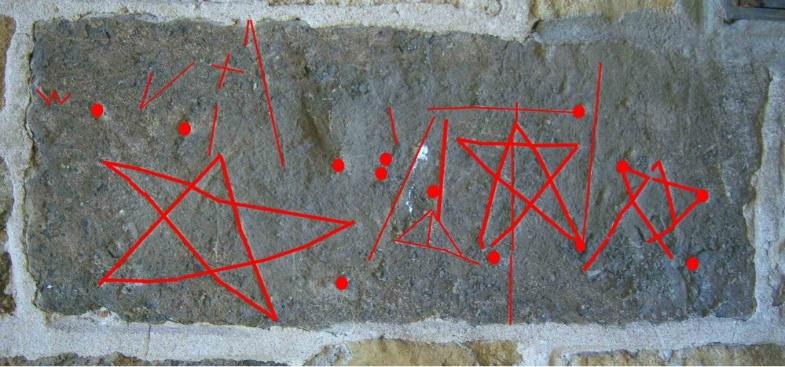 talk, and at short notice your Chairman filled in. The simple Zoom arrangement, where the Host (me) and the Speaker (me!) were the same, seemed to work and we hope that future Zoom talks will continue to run as smoothly. The title Graffiti in Local Churches: devotion or desecration? turned out to be too simplistic, as the variety of marks in churches are often both devotional and scurrilous and much more besides. It is clear that although many of these vernacular inscriptions survive in pre-Victorian churches, many have also been lost to some vigorous cleaning and refurbishment regimes. As an archaeologist, the speaker is well acquainted with the problems posed by incomplete material, and so any conclusions, especially those based on where surviving graffiti are found, have to be cautious ones. That said, some locations do seem to have attracted graffiti makers, – eg the porch, chancel and tower arches, aisle pillars, and door and window surrounds, whereas blank walls, the favoured canvas of the contemporary graffiti artist, were largely ignored. Mystery still surrounds the meanings and motives of much church graffiti, and there is a growing research interest in documenting and recording it.
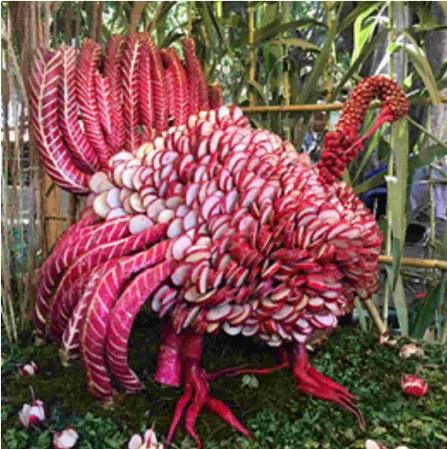 With the Village Hall still unavailable for our traditional December mince pies and mulled wine meeting your committee appealed to members to present short memorable personal recollections of Christmas via Zoom. Thank you so much to the dozen who informed and entertained us with their stories, and to the 25 participants who supped festive drinks and joined the meeting from their homes. Claire Roberts kicked off with an account of an exotic pre-Christmas festival in Oaxaca, Mexico, where oversized radishes are carved into intricate designs. Her photos of turkeys and entire Nativity scenes fashioned from radishes were extraordinary. As was her account of being warmly included in a family party, attended by accident – a welcome reminder of the kindness of strangers.
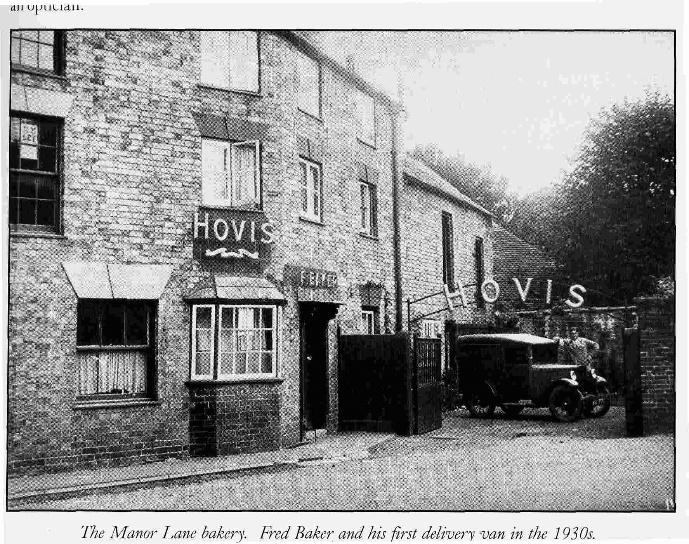 BBC1 transmissions to the Orkneys, and then had to endure a very rough ferry crossing from Scrabster to Stromness (and back) to sort it out, apparently by flicking a reset button. Jane Waters described how her family of bakers in Sevenoaks produced elaborately iced three-tiered cakes for the local gentry. Tiers mean something a little less festive nowadays. Jane’s mother, born in 1912, could remember villagers bringing their Christmas turkeys to be cooked in the baking ovens on their way to church, and picking them up on the way home. The same was happening in Kineton at Fred Baker’s bakery at the top of Manor Lane.
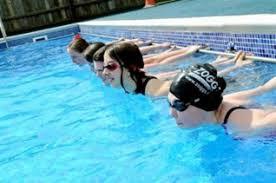 Closer to home Pam Redgrave revealed a history of swimming instruction, life saving and swimming pool construction. Forty years ago she helped build the High School swimming pool, a pioneer solar heated facility. On Christmas day morning 1980 she was one of a party invited to swim in the newly completed pool by the retiring headmaster, Mr Turner. She managed 40 lengths in an hour.
 of catering and entertainments at an Oxford hotel the pre-booked Father Christmas met with an accident before he was due to entertain a party of 30 children aged 3 to 10 years old on Christmas day. Ted was pressed into service but had to squeeze into a borrowed costume, too small for him, obtained after many panic phone calls. Presents appropriate to each child’s age had been wrapped and name tagged but several children had the same name, so Ted had to rely on his elf assistant, who had bought the presents, to advise him which ones to give to whom. Opportunities for disaster were many, but luck was on Ted’s side. I hope he got a bonus.
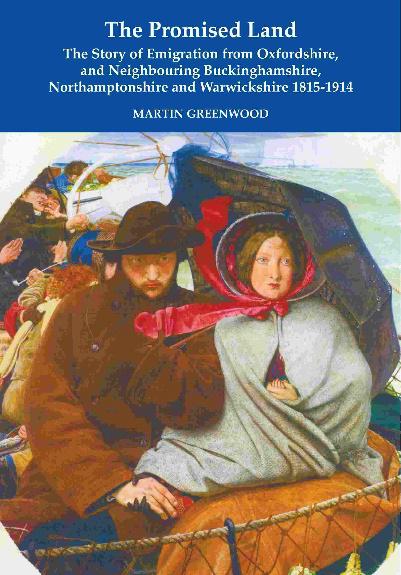 Local historian Martin Greenwood has informed us of his new book called ‘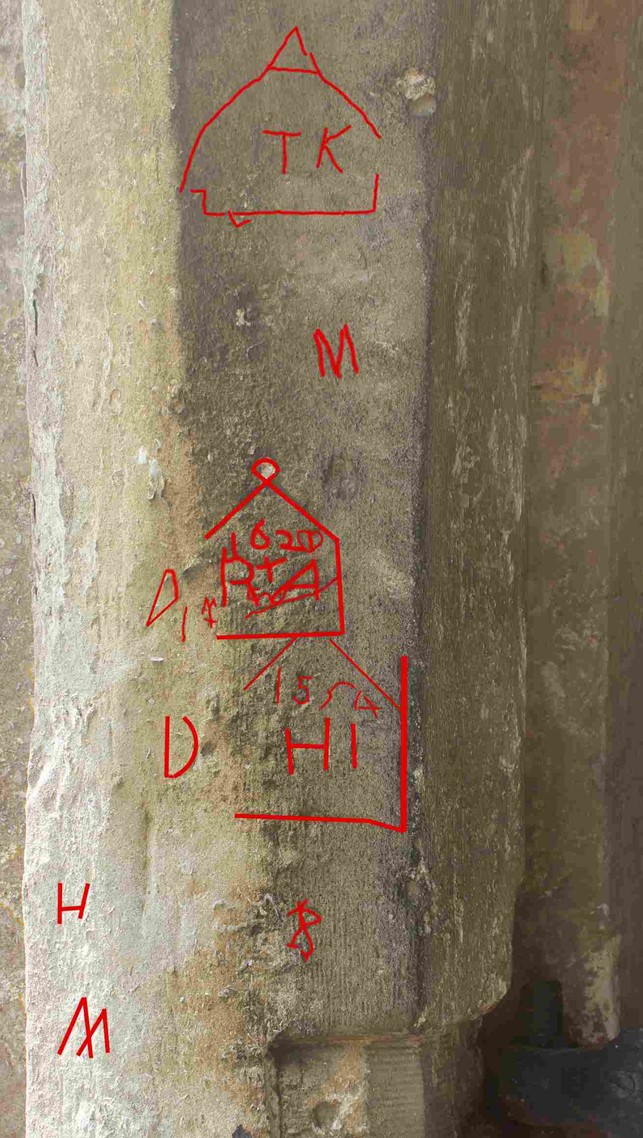
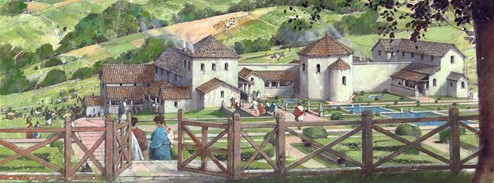
 have Keith Westcott talking about his recent discovery of the extensive Roman villa on the Broughton Castle estate. As a keen metal detectorist he considered the landscape context and previous local discoveries and set about systematically investigating his hunch that there was some significant Roman activity in the area. His persistence was rewarded, and since his discovery he has been working with evangelical zeal to consolidate his findings. and to integrate the amateur, specialist and professional interests he has generated in researching the site.
 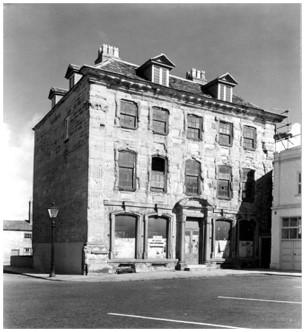 worsted spinning mill in England at the time, employing 500 workers, and it was the first factory in Warwickshire to bring all the elements for producing worsted yarn into one place – “vertical integration”. The factory system was a blow to the cottage industries and was not welcomed by all, although the frame breaking by Luddites experienced elsewhere did not affect Warwick. The Warwick factory’s efficiency enabled it to supply Leicester and Hinkley hosiery manufacturers and Kidderminster carpet factories. It benefitted from the innovations of the industrial revolution taking place in the west midlands, with a Bolton and Watt steam engine and a patented “Smoke Consumer” to meet the requirements of the 1821 Steam Furnaces Act, an early anti-pollution measure. The factory contributed to Warwick’s prosperity and growth in the early 19th century, although the living condition of the workers was appalling, with the factory district a notorious slum of “pauper squares”. The decline of the business came about through a combination of personality clashes between the partners’ heirs, the economic decline following the end of the Napoleonic wars and stiff competition as other centres with better resources caught up with Warwick. Our thanks to Tim Clark for his stimulating talk, and for agreeing to be our first semi-virtual speaker, and thanks also to our membership.
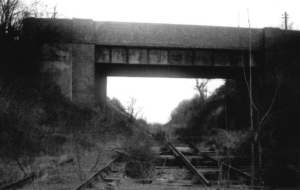 Our February 21st meeting features an illustrated talk by Andrew Baxter, a speaker familiar to us from his stimulating talk last year on the Edgehill Tea Gardens. Andrew will describe the recent work that he and other enthusiasts have been carrying out on the surviving vestiges of the Edgehill Light Railway. This short-lived enterprise left clear landscape features and some surviving artefacts but has otherwise disappeared from most people’s awareness. We will learn what the light railway project if completed would have meant to the landscape of the area.
 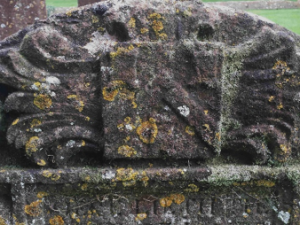 Report on our first meeting in the New Year. For our first 2020 meeting David Freke gave an account of the art of 18th century local village stone masons. In fact David started way back in the 17th century to set the scene for the sometimes extremely accomplished 18th century work still visible in so many of our local churchyards. The very style of headstones can illuminate the religious controversies of the period, as well as the status of the patron and the skill (or lack of it) of the mason. The influence of outside events also played a part, with local craftsmen attracted to London in the wake of the Great Fire, and returning with up-to-date ideas and training. A few proudly displayed the arms of the Worshipful Company of Masons of London on their own headstones. Their work is visible to anybody to see in our local churchyards, and it is hoped that better knowledge will lead to better appreciation and better protection of what still survives after 300 years or so of English weather, and well intentioned but often destructive churchyard tidying episodes. Our President Bob Bearman led the vote of thanks, and the membership then adjourned for refreshments presided over by Ilona.
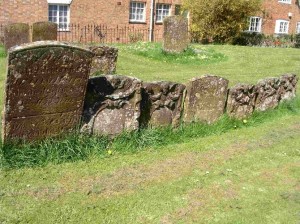 For our first 2020 meeting David Freke will give an illustrated talk entitled Elegy on Country Churchyards: the art of 18th century local village stone masons. The Group’s survey of St Peter’s churchyard, initiated by Peter and Gill Ashley-Smith in 2010, was the start of this study. It has led to investigations into local genealogy, geology, politics, religion and art history. The thread which binds these elements together has been the search for the many men (always men) who made the thousands of 17th and 18th century memorials which still survive in our local churchyards. These memorials constitute the largest body of vernacular art of the period, far outnumbering folk art objects in galleries, and much more accessible. As Gray’s Elegy might have put it: “Some mute inglorious Mason here may rest” and the hope is that some may not be so mute nor so inglorious when their work is better appreciated.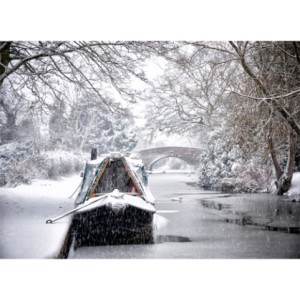
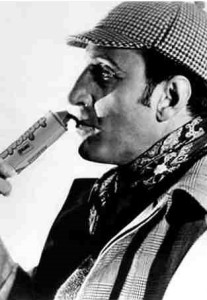 Which is more than can be said for the final part of the meeting. Tripping over the clutter of mikes, cables and props, Kineton’s Other Dramatic Society aka the committee – aided by Jane Waters in an original Victorian dress (the most authentic element of the whole sorry saga) – the committee stumbled through a doggerel script purporting to be a Victorian who-dun-it, with dreadful puns and mangled syntax. It was farrago of nonsense about a lost gavel, involving mispronounced place-names, a thinly disguised parody of Conan Doyle’s famous detective addicted to sherbet, with some inappropriate violin abuse, all fed through a Dickensian mincer to emerge as a tale, full of sound and fury, and signifying nothing. Congratulations to all involved for the sheer nerve of it, and to the membership for refraining from catcalls and brickbats. Afterwards, with much relief, to quote a line from the performance, the membership fell on the traditional mince pies, provided by the committee, and the mulled wine prepared by Ilona, served by Mark and Jackie Walker.
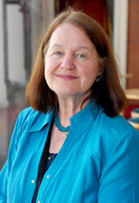 particular her recordings of people who lived in Birmingham’s “back-to-backs”. She vividly demonstrated the importance of capturing the experiences of “ordinary” people, which might otherwise go unrecorded and unappreciated. Her examples included children and even a titled lady describing the English upper-class dinner ritual of not so long ago. A query from Gill about whether she would edit words or phrases which are now considered inappropriate (she wouldn’t) led on to a discussion about the possibility of bias in the record in favour of politically correct attitudes. Helen described a deliberate attempt to redress this perceived imbalance by seeking out a racist to record, with mixed results. Her point was that the recordings are valuable because they try to reflect the way people actually think, and sound. Another issue was the long-term security of the recordings, given the rapid changes we have seen in sound recording technology. There is the risk of historic recordings being lost either through deterioration of the medium or as the equipment to play them becomes obsolete. Our own oral history recordings are indeed on out-dated mini-discs. Helen conceded that in the future video clips might have a greater role, given their current ubiquity. Ilona led the vote of thanks for a stimulating and entertaining evening.
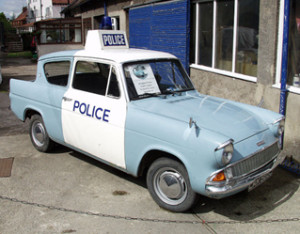 On the beat he seems to have found ways to liven up boring night shifts. One device was to play cat-and-mouse around Redditch with a fellow panda car patrol, in the course of which, on one occasion, he chased and apprehended a pair of safe crackers by accident, thinking that their car was his fellow officer’s. He felt his subsequent commendation was possibly unearned. On another occasion he drew his truncheon and bravely confronted a sinister noise coming from a narrow, darkened passage, only to discover a cat. We did learn the Correct Use of the Truncheon however.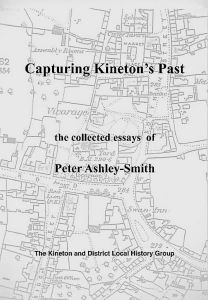
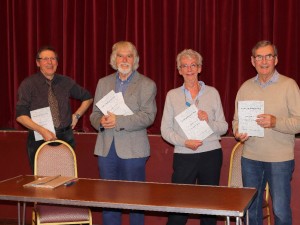
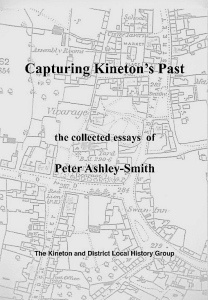 Peter’s local history essays, edited by our President Robert Bearman, have now been printed and members and friends are invited to the launch on October 4th at 7.30 in the Village Hall.
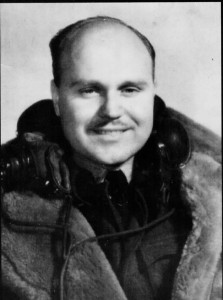 Our first evening talk after the summer break is on Friday 20th September entitled Shadows of the Past: WWII, to be given by Paul and Terry Gaunt, cousins of our Vice-Chairman Roger Gaunt, about the exploits of Roger’s uncle, Phillip “Tubby” Gaunt, as a WWII bomber pilot. Paul Gaunt has written a book about his father’s career, from training to a crash landing in Croatia. You will have to come on Friday to hear the end of that story …..
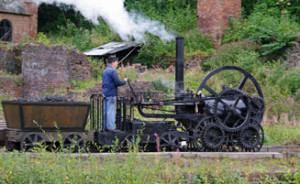 We were looking forward to visiting this World Heritage Site, a cradle of the industrial revolution, which includes Blists Hill Victorian Town, the iconic bridge itself and other historic industrial sites in Ironbridge Gorge, and it did not disappoint. The drizzle which greeted us at Blists Hill quickly evaporated, helped by a quick coffee and visits to the Bank, the grocers, the carpenters shop, the haberdashers (under 40s won’t know what that is!) and other nostalgic delights (eg fish and chips). A highlight for some was the steam locomotive, constructed to Trevithick’s 1802 designs by GKN Sankey apprentices in 1989, puffing up and down its short track, proving its practicality decades before Stephenson’s “Rocket”.
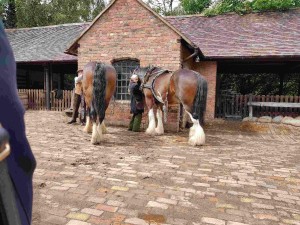 The shire horses also demonstrated that heavy haulage was still mainly horse powered. The extent of the 18th and 19th century enterprise here was clear from the ruins of the blast furnaces at the bottom of the town, and the sundry bits of iron machinery set up on the roadside, together with pigs and chickens to show that there was a domestic dimension to all this industry.
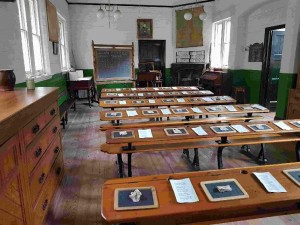 reminded a few of us of their own school days, although we had inkwells not slates. Various craftworkers demonstrated their skills such as woodcarving, and bread making. We moved on to see the iconic bridge, surprisingly high above the Severn, and now in a settlement whose existence is entirely due to its presence.
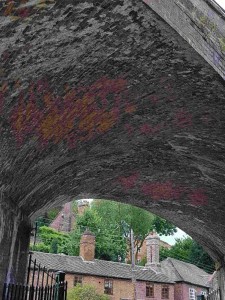 Ice cream was needed before our third and final stop at the Coalbrookdale Museum of Iron, re-opened in 2017, full of new exhibits explaining the development of ironworking and the history of the Coalbrookdale industrial complex. It is approached through an example of the wonderful brickwork achieved by Victorian engineers and builders – one of a series of skewed brick arches supporting a railway viaduct – although it proves an awkward access for today’s coaches. The museum’s objects and displays chart the increasing sophistication of ironworking technology, which was not always matched by a correspondingly sophisticated taste.